Advice, comment & opinion | Free Early Learning Resources for Teachers
Posted by: SAL MCKEOWN On: April 30, 2012 our contributors
Storyphones are so robust and versatile that you cannot imagine how schools have managed without them. Their creator Eleanor Johnson was an early years teacher atSouthStanleyInfantsSchool inCountyDurham and didn't like the fact that children were stuck in the reading corner with a plug-in audio head set. Read More...
Posted by: PETER SAMUEL On: April 17, 2012 our contributors
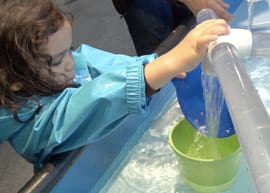
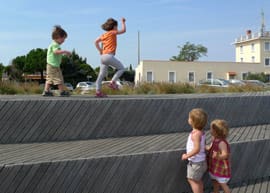
I’ve been talking quite recently about outdoor play and the forest school approach. I thought I’d augment these articles with a selection of outdoor play ideas. However before I do that I’m going to highlight a little passage about outdoor continuous provision taken from the ‘ABC Does’ blog. If you’re not familiar with ABC Does it’s written by Alistair Bryce Clegg, (an experienced early years consultant and former head teacher of an Infant School and Early Years Unit) and it’s a treasure trove of creative and inspirational ideas for early years settings. You may already be familiar with his work as he’s a written a number of books and even a couple of articles specifically for our blog. Anyway, according to Alistair... Read More...
Posted by: PETER SAMUEL On: April 16, 2012 our contributors
As a follow to my last post about gardening in the early years I thought I’d put together a list of fun and engaging early years stories that touch upon the theme of gardening. I’ve provided links to Amazon in case something catches your eye that you would like to buy. If you can think of any others please leave a comment below... Read More...
Posted by: PETER SAMUEL On: April 3, 2012 our contributors
In the wake of the National Trust’s recent report highlighting the decline in outdoor play in the UK I thought I’d provide a quick overview of the forest school approach as I feel it could help to reconnect children with the natural world.
What is the Forest School approach?
The Forest school ethos developed in Sweden in the 1950s but it is becoming increasingly popular here in the UK. It’s an approach that takes a long term sustained approach to outdoor learning. Forest schools seek to encourage, motivate, engage and inspire children through positive outdoor experiences. Read More...
Posted by: RACHEL RIGGS On: March 27, 2012 our contributors
Children in the lead
The Early Years artist focuses specifically on children being the drivers of the programme rather than the adults. Only too often, in children’s arts education, the elements used are based on what the artists think the children might like to experience or be entertained with. Imaginary Leaps aims to engage the children in a participatory exploration of which themes, objects, elements and sensory materials they themselves choose to experience and participate in. Read More...
Posted by: RACHEL RIGGS On: March 26, 2012 our contributors
Creative play
Imaginative play for young children is based on activities and objects familiar to them. Toys, stories and miniature versions of everyday things allow children to create their own worlds. They can play on their own, with an imaginary friend or with a group of “real” friends. During free play with objects and materials, a child uses a symbolic visual language (e.g. a stick for a sword) and creates play props to work out identity issues, essential for their future adult life. Read More...
Posted by: SAL MCKEOWN On: February 17, 2012 our contributors
Jack seems to be in a world of his own. While other children run and play, he hangs back and when it is time to put things away and sit on the carpet for story time he seems to be dawdling. Yet if you get him on his own and talk to him he is very articulate, bright and funny. If you are working with a child who fits this profile it is quite likely that he has dyslexia or, dyspraxia or a combination of the two. Read More...
Posted by: SAL MCKEOWN On: December 5, 2011 our contributors
December saw the official preview of Clicker 6 at Crick software’s headquarters inNorthampton. Clicker is already used in 90% of UK primary schools which prompts two questions. Why do we need a new version of Clicker and if we’ve got one of the previous five versions, why would we bother getting a new one? Read More...
Posted by: MARY MEDLICOTT On: November 19, 2011 our contributors
Just out is a new book about writing in schools. Writing Voices is by Teresa Cremin and Debra Myhill, two highly experienced educationists with wide experience of writing projects of very many different kinds. The subtitle of the book – Creating Communities of Writers – says a lot about the spirit in which it is written. It deals with writing across all ages and draws on the feelings and experience of people involved at different levels and in different ways - children, teachers and professional writers. I feel especially delighted with it for three different reasons. Read More...
Follow us: